Toilet Overflow Cleanup in Fortville: Category 3 Removal
The call came in at 11:47pm on a Tuesday. A Fortville homeowner had walked into her hallway barefoot and stepped into something she immediately wished she had not. The upstairs toilet had been quietly overflowing for what she guessed was twenty minutes, maybe longer, while her family slept. By the time she found us through a frantic Google search, the water had soaked through her hallway carpet, seeped under two bedroom doors, and was dripping through the dining room ceiling below. She asked the question we hear almost every week: is this really as bad as it looks?
The honest answer is usually yes. Toilet overflow water, especially when it involves anything past the trap, is classified as Category 3 water under IICRC S500 standards. That means it carries bacteria, viruses, and pathogens that turn a soggy floor into a biohazard. At Fortville Water Restoration, we have walked into hundreds of these scenes across central Indiana since 2018, and the playbook is always the same: contain it, extract it, sanitize it, dry it, and document everything for your insurance carrier. What changes is the story behind each call, and those stories are the best way to understand what you are actually dealing with tonight.
Quick Answer: What to Do in the First 15 Minutes
If a toilet is overflowing right now in your Fortville home, follow this sequence before anything else:
- Shut off the water supply valve behind the toilet (turn clockwise)
- Turn off the main water line if the shutoff valve fails
- Keep all people and pets out of the affected room
- Open windows for ventilation, but do not run HVAC fans
- Do not use other toilets or drains if the cause is a sewer backup
- Photograph everything for your insurance claim
- Call a certified sewage cleanup crew, not a general handyman
Black water contains E. coli, hepatitis, rotavirus, and parasites. A wet vac and bleach will not make it safe. The contamination penetrates porous materials within minutes, and the airborne pathogens can linger in the room for hours after the visible water is gone. Anyone with a compromised immune system, infants, or pregnant women should leave the home entirely until remediation is complete.
What Gets Removed vs. What Gets Saved
Homeowners often ask why we cut out drywall that looks dry. The answer is in the porosity. Black water wicks into porous materials and the bacteria stay alive even after the surface feels dry.
Materials That Must Be Removed
- Carpet and carpet pad in the contaminated zone
- Drywall up to 12 to 24 inches above the water line
- Insulation behind affected walls
- Particleboard cabinets, vanities, and toe kicks
- Laminate flooring with swollen seams
- Upholstered furniture that contacted the water
- Mattresses, pillows, and stuffed toys within the splash zone
- Books, paper records, and cardboard storage
Materials That Can Often Be Saved
- Solid hardwood flooring, if dried within 48 hours
- Ceramic tile with intact grout
- Sealed concrete subfloor
- Solid wood furniture with sealed finishes
- Glass, metal, and hard plastics after disinfection
- Clothing and linens after hot water laundering with disinfectant
For broader context on how flooding affects lower levels, our guide to flooded basement cleanup and professional drying walks through the same decision logic for finished basements where a toilet failure on an upper floor sent water through the ceiling.
Common Causes of Toilet Overflow in Fortville Homes
- Clogged trap from flushable wipes (they are not actually flushable)
- Main sewer line blockage from tree roots in older neighborhoods
- Municipal sewer surcharge during heavy rain events
- Failed fill valve or flapper causing continuous overflow
- Frozen vent stack in winter creating pressure issues
- Septic system saturation in homes outside city sewer service
- Foreign objects flushed by small children, a surprisingly frequent cause
- Collapsed clay or cast iron drain pipes in homes built before 1980
If your overflow connects to a broader sewer issue, review our detailed walkthrough on sewage backup cleanup and safe removal for what to expect when the source is the municipal line rather than the fixture itself.
When to Call Fortville Water Restoration in Fortville
If wastewater has crossed the bathroom threshold, soaked into a hallway runner, or dripped through a ceiling to the floor below, the clock on safe remediation is already running. Fortville Water Restoration dispatches IICRC certified crews across Fortville 24 hours a day, documents every step for your insurance claim, and gives you a straight answer on scope and cost before work begins. Call us, walk us through what you are seeing, and we will tell you whether this is a job you need us for or one you can handle yourself.
The Fortville Water Restoration Category 3 Cleanup Process
Every sewage job in Fortville follows the same eight phase protocol. We document each step for your insurance carrier.
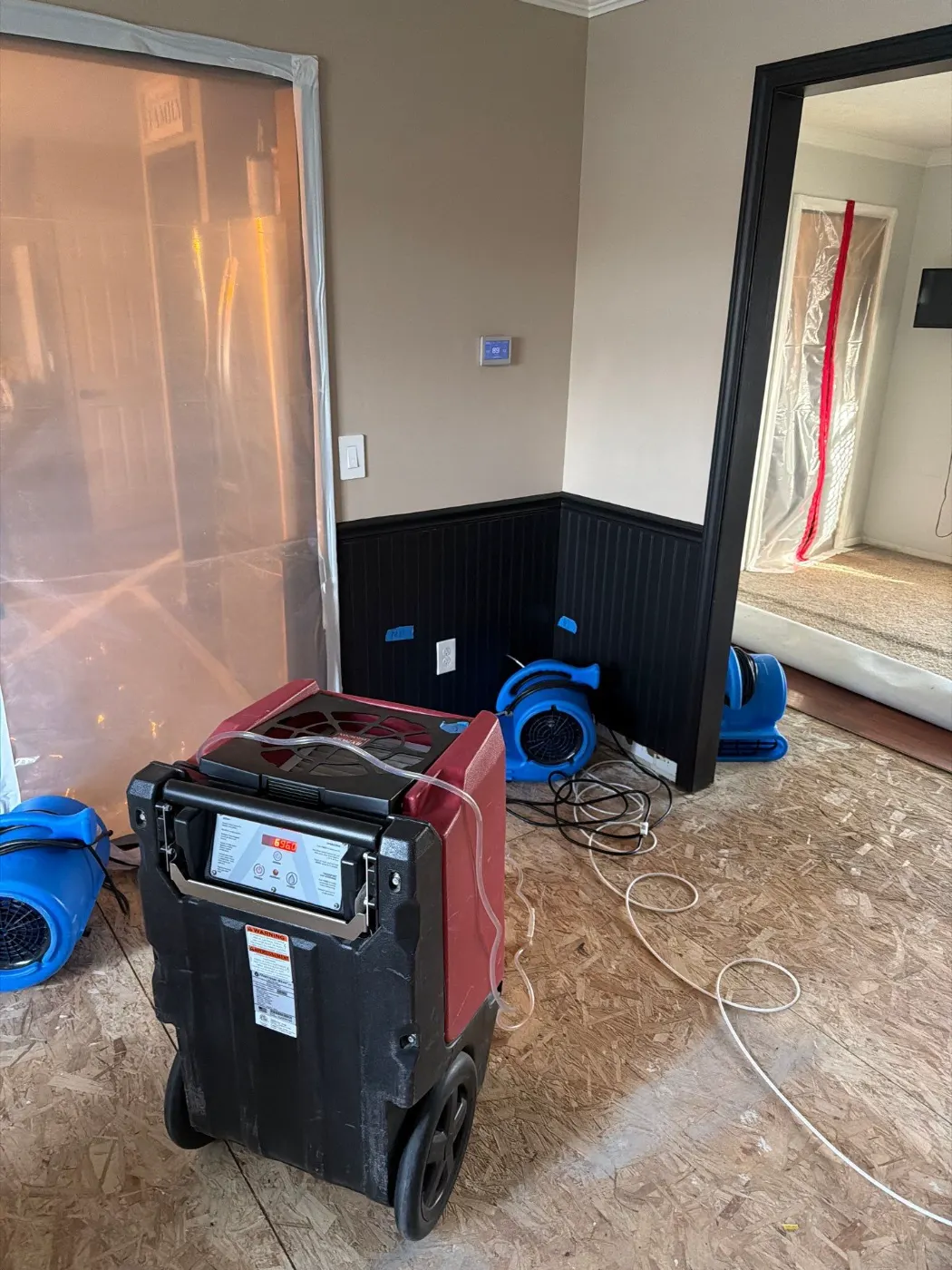
- Assessment and containment. We isolate the affected area with plastic sheeting and negative air machines.
- PPE and biohazard protocols. Crews wear respirators, suits, and gloves rated for biohazard exposure.
- Bulk water extraction. truck mounted units pull standing sewage from floors and cavities.
- Contaminated material removal. Carpet, drywall, and insulation are bagged as biohazard waste.
- Antimicrobial application. EPA-registered disinfectants treat every surface that contacted the water.
- Structural drying. Commercial air movers and dehumidifiers run for 3 to 5 days with daily moisture readings.
- Clearance testing. We verify moisture content is below 16 percent and surfaces test clean.
- Reconstruction. Drywall, flooring, trim, and paint restore the space to pre loss condition.
Most single bathroom toilet overflows in Fortville run between $2,500 and $7,500 for full Category 3 remediation. Larger jobs involving multiple rooms, finished basements, or sewer main backups can range from $8,000 to $25,000. Homeowners insurance typically covers sudden overflow, but municipal sewer backup needs a specific endorsement on your policy. Our full sewage cleanup service page outlines what we document for adjusters.
IICRC Water Categories Explained
Not every wet floor is the same emergency. The Institute of Inspection, Cleaning and Restoration Certification classifies water into three categories, and the category drives the entire response plan.
| Category | Source | Risk Level | Typical Response |
|---|---|---|---|
| Category 1 | Clean supply line, fresh water | Low | Extract and dry in place |
| Category 2 | Dishwasher, washing machine, aquarium | Moderate, gray water | Sanitize and dry, some removal |
| Category 3 | Toilet overflow with waste, sewer backup, flood water | High, black water, biohazard | Remove contaminated materials, disinfect, structural drying |
A toilet overflow that contains only clean bowl water can sometimes be treated as Category 2 if cleaned within hours. The moment fecal matter, toilet paper, or sewer line backflow is present, it is Category 3. Time also degrades the category. Category 1 water sitting for 48 hours often becomes Category 2 or 3 from bacterial growth.
Preventing the Next Overflow
After remediation is complete, homeowners often ask what they can do to keep this from happening again. A few habits and small upgrades make a meaningful difference:
- Install a backwater valve on your main sewer line, especially in basements below street grade
- Schedule a camera inspection of your lateral line every 3 to 5 years if you have mature trees
- Replace rubber supply hoses with braided stainless steel every 5 years
- Keep a labeled shutoff wrench near the main water valve
- Teach every household member where the toilet supply valve is located
- Avoid chemical drain cleaners, which damage seals and worsen clogs
If you are unsure whether a recent overflow was handled properly, a moisture meter reading along the baseboards and toe kicks will tell you quickly. Anything above 16 percent on framing or 1 percent on concrete means trapped moisture remains, and mold growth is likely within 72 hours. Fortville Water Restoration offers post incident inspections for Fortville homeowners who suspect a prior cleanup was incomplete.
Frequently Asked Questions
Is a toilet overflow always considered Category 3 water?
If the overflow includes anything from past the trap, yes. Even an overflow that appears clear is Category 3 if it pushed up from the drain side. Our Fortville technicians treat any toilet overflow as contaminated until testing proves otherwise.
Will my homeowners insurance cover toilet overflow cleanup?
Most policies cover sudden accidental overflows, but backups from the sewer line usually require a separate water backup endorsement. Fortville Water Restoration documents every job so your Fortville adjuster has the evidence needed to approve the claim.
How long does cleanup and drying take?
A contained bathroom overflow typically takes 3 to 5 days from extraction to final dryness verification. Larger losses affecting multiple rooms or a finished basement in Fortville can take 7 to 10 days before reconstruction begins.
Can I clean it myself with bleach?
Bleach kills surface bacteria but does not address what has soaked into carpet pad, drywall, or subfloor. Fortville Water Restoration uses EPA-registered hospital-grade disinfectants and removes non-salvageable materials that household products cannot decontaminate.
What if the sewage reached my finished basement?
That changes the scope significantly. Carpet, pad, drywall bottom sections, and any stored belongings on the floor typically have to be assessed for contamination. Call Fortville Water Restoration immediately so we can contain the spread before it reaches more materials.
Have a restoration question?
Our IICRC certified Fortville crew is ready to help. Free assessments, estimate based on what we can sees, no pressure.